
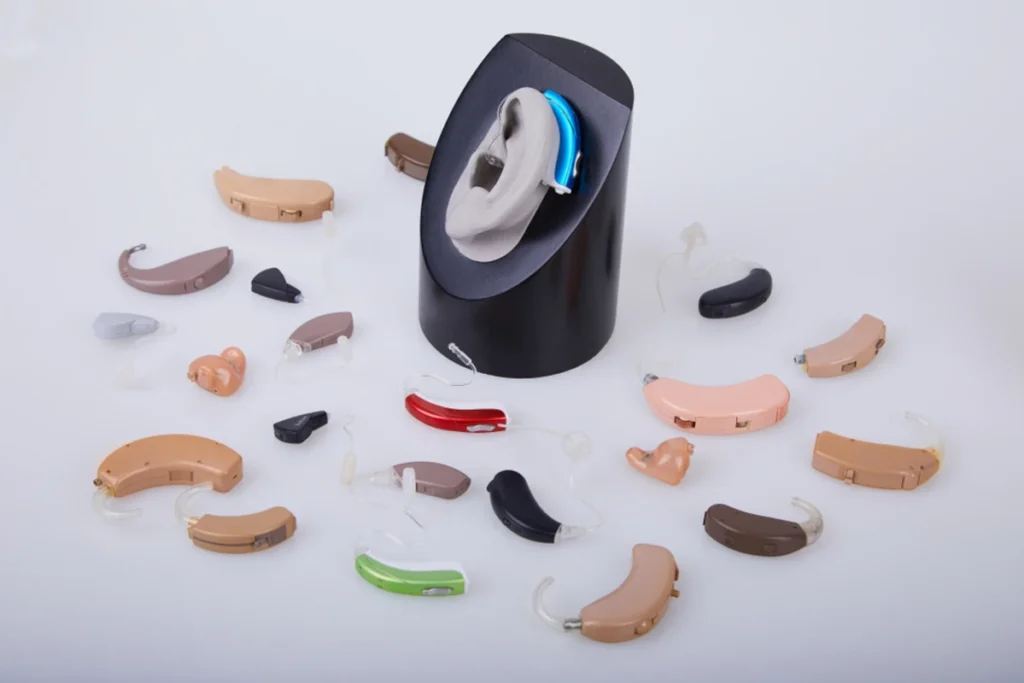
Hearing aids have evolved substantially since their first appearances in the early 1900s. At the turn of the 20th century, the only available hearing aid solutions were mostly crude devices unable to differentiate between sounds.
Throughout the following almost hundred years, the technology improved only slightly. It was still primarily based on analog amplification and included very few innovations.
Finally, the emergence of digital technology radically transformed the hearing aid market. Transitioning from analog to digital hearing solutions dramatically improved several key areas of the service, including accessibility and customization. This article presents an overview of the historical development of hearing aids and the primary benefits of modern digital solutions.
Technological Advancements in Hearing Aids
While some analog hearing aids from the seventies can be viewed as proto-predecessors of designs incorporating features found in today’s devices, the first groundbreaking products as we know them hit the market during the 1980s. They were developed with digital circuits within analog technology, allowing them to be programmed according to the surrounding environment.
Nevertheless, most devices remained analog and bulky throughout the 1990s. It was only in the late nineties that fully digital hearing aids emerged, capable of processing sound from its source.
Digital technology became the standard in the 2000s, with many devices equipped with Bluetooth for streaming and other features designed to improve quality of life. Unlike cumbersome and highly visible analog hearing aids, modern hearing aids can be discreet: they fit directly into the ear without wiring or prominent external components.
Customization and Personalization
One of the most significant advancements hearing aids have experienced through digitization is the precision with which solutions can now be tailored to each person’s unique auditory needs. Using sophisticated software and wireless programming, audiologists can craft nuanced hearing profiles during testing to accommodate even the subtlest deficits.
Every element can be individualized, whether fine-tuning certain frequencies or calibrating noise-reduction settings. This customization allows wearers to derive maximum benefit from their investment over both the short and long term.
What’s more, multiple reconfigurable listening modes give users the ability to optimize their hearing aids for different environments instantly through app or button controls. These personalized features greatly improve comfort while maximizing overall effectiveness. However, continual remote adjustments may still be required as needs inevitably evolve.
User Experience and Accessibility
Moreover, technological progress has vastly improved the user experience. Digital devices are simple to operate; many come equipped with automatic programs and the ability to adjust settings from a phone. The discreet design of these devices has been an important development, helping reduce the social stigma associated with hearing aids by ensuring that the devices do not stand out.
The most discreet, micro-style hearing aids have become popular, with some designed to be nearly invisible and fit almost entirely within the ear canal.
Greater comfort means a higher likelihood of regular use. Sound quality has become much better and more natural. The improved user experience has empowered the public and made people more willing to embrace hearing aids.
Today, many recognize hearing aids as high-tech tools rather than cumbersome medical devices. The invention of digital systems has changed lives, making hearing solutions more versatile.
Final Thoughts
The shift from analog to digital technology has transformed the hearing aid industry. Miniaturization, customizable programming, wireless connectivity, and acoustic processing algorithms have made the user experience significantly better.
Older adults and individuals experiencing hearing impairment can benefit from tiny, discreet devices customized to their specific needs.
In the future, technological breakthroughs may bring further improvements in miniaturization, simplification, and smartphone and technology integration. While analog technology clearly served its purpose, digital technology is transforming hearing aids from simple devices into sophisticated, stylish accessories.
Technological advancements allow manufacturers to develop high-quality, attractive products that make people’s lives easier.
Think you might need a hearing aid? If so, check out this hearing quiz.