
Have you thought about possibly having mild hearing loss?
Do you sometimes catch yourself turning the TV volume up louder and louder? Do you strain to listen to someone speaking in a noisy setting? These can be symptoms of mild hearing loss. As this condition can affect anyone, it is important to recognize the signs and seek help.
There are various causes of hearing loss. For instance, genetic factors are the predominant cause of hearing loss in more than half of pediatric cases.
Hearing loss, even when mild, can cause concern or frustration, but fortunately, there are approaches to address it. Understanding the characteristics of mild hearing loss can help you identify the condition and seek medical attention for yourself or others.
This article will provide an overview of mild hearing loss, including its causes, symptoms, severity levels, and available treatments.
Contents
- What is Mild Hearing Loss?
- What are the Causes of Hearing Loss?
- What are the Symptoms of Hearing Loss?
- How Severe is Hearing Loss?
- When Should Help Be Sought?
- What Treatments Are Available for Hearing Loss?
- Conclusion
What is Mild Hearing Loss?
Mild hearing loss is an impairment in the ability to hear sounds at lower volumes than are considered normal.
Decibels (dB) are the units used to measure sound pressure levels, or volume. Sound with a higher decibel rating is louder than sound with a lower rating. The human auditory range spans from 0 dB, representing the quietest audible sounds, to approximately 140 dB, which is considered intensely loud.
Mild hearing loss generally refers to difficulty hearing sounds below certain volume thresholds. These thresholds vary by age and classification, and even quieter sounds may be difficult for some people to hear.
What Should You Do When Ringing In The Ears Occurs

How do doctors classify hearing loss?
There are four classifications of hearing loss: conductive, sensorineural, mixed, and central.
- Conductive hearing loss: This occurs due to an issue with the structure or function of the outer or middle ear that prevents sound from traveling through properly.
- Sensorineural hearing loss: This is caused by damage to the inner ear or auditory nerve pathways. Soft sounds may be difficult to hear, while loud sounds may seem muffled or unclear.
- Mixed hearing loss: This is a combination of conductive and sensorineural hearing loss, involving problems in both the sound-conduction system and the inner ear or auditory nerve pathways.
- Central hearing loss: This involves a diminished ability to detect or understand sound because the signal pathways between the ears and the brain are impaired.
What does mild hearing loss sound like?
The kinds of sounds that may be missed include whispers, birds chirping, rustling leaves, tapping feet, and running water.
This level of hearing loss can have a noticeable impact on communication. People with this condition often report difficulty understanding conversations in noisy environments or when the person they are talking to is facing away from them or standing at a distance.
What are the Causes of Hearing Loss?
The ear can be divided into three main parts:
- The outer ear.
- The middle ear.
- The inner ear, which includes the cochlea.
Each part plays a role in enabling us to hear sounds. Therefore, when hearing ability is reduced, it may be because of damage to or a problem with one or more of these parts.
An infection, a blockage caused by a buildup of cerumen (earwax), or overexposure to loud noises may affect the outer or middle ear.
On the other hand, problems with the inner ear can arise from inherited genetic conditions, certain medications, aging, or physical trauma. For instance, individuals over the age of 65 commonly experience hearing loss. As we age, the tiny hair cells and nerve cells in the inner ear can gradually deteriorate.
Other factors, such as prolonged exposure to loud noise and medical conditions like otosclerosis, can result in partial or complete hearing loss.
What are the Symptoms of Hearing Loss?
Difficulty hearing and frequently asking others to repeat themselves during conversations are common indicators of a possible hearing problem.
Other signs can include:
- Difficulty locating where sounds are coming from.
- Being unable to hear certain high-pitched sounds.
- Hearing sounds as muffled.
- Thinking people are mumbling or whispering when they are speaking at a normal volume.
- Finding it easier to hear when facing the source of the sound.
- Listening to audio at a high volume without it sounding loud enough.
How Severe is Hearing Loss?
Hearing loss can be divided into four general categories, each representing a different degree of severity:
- Mild hearing loss: Indicates difficulty hearing soft speech or high-pitched sounds.
- Moderate hearing loss: Can affect speech comprehension, particularly in noisy environments.
- Severe hearing loss: May cause a person to miss much of everyday conversation.
- Profound hearing loss: Involves very limited hearing ability and may make spoken communication difficult without appropriate support.
Can a person with moderate hearing loss hear speech?
Moderate hearing loss can make consonant sounds more difficult to distinguish, and some vowel sounds may also be harder to understand.
The ability to follow conversations may be significantly affected. People with moderate hearing loss often describe their experience as being able to hear sounds but not always understand what is being said.
As a result, people with moderate hearing loss may find social situations challenging, including attending lectures or presentations in a workplace.
When Should Help Be Sought?
Do not hesitate to consult an audiologist and arrange a professional assessment. You may also complete an online hearing test as an initial screening tool. Doing so can help you better understand your symptoms and determine whether further evaluation or treatment is needed.
An audiologist can perform a hearing test to check the type and severity of hearing loss you may have.
This hearing test measures the sounds you can hear at different frequencies and volumes, comparing your ability to detect high-pitched and low-pitched sounds to assess your hearing.
The audiogram highlights areas where there may be problems detecting sounds. The test is painless, noninvasive, and usually quick, helping determine whether hearing impairment is present.
Alternatively, you can use an online tool, such as the hearing quiz provided by El Dorado Hearing, which offers a preliminary assessment of your hearing within approximately five minutes at no cost.
What Treatments Are Available for Hearing Loss?
Hearing loss treatments range from simple, noninvasive approaches to surgical procedures. The type of treatment recommended will depend on the underlying cause of the hearing loss.
One treatment option involves prescribing antibiotics to address an underlying bacterial infection that may be contributing to hearing loss. Depending on the condition, these may be administered as ear drops or in another form.
If a medication is found to be contributing to hearing loss, a healthcare professional may consider changing it when appropriate. Do not stop or change prescribed medication without consulting your doctor.
In some cases, surgery may be necessary to address hearing loss caused by conditions such as otosclerosis or certain infections or structural problems affecting the ear. Treatment for Meniere’s disease depends on the symptoms and underlying condition, and hearing loss may not always be reversible.
However, immediate medical evaluation is recommended when hearing loss occurs suddenly.
The severity and type of hearing loss can also affect the treatment options available.
For example, if you have tinnitus associated with exposure to loud noise, sound therapy or specialized sound-masking devices may help reduce symptoms over time.
There are also hearing devices that can improve hearing ability, including hearing aids, assistive listening devices, and implants.
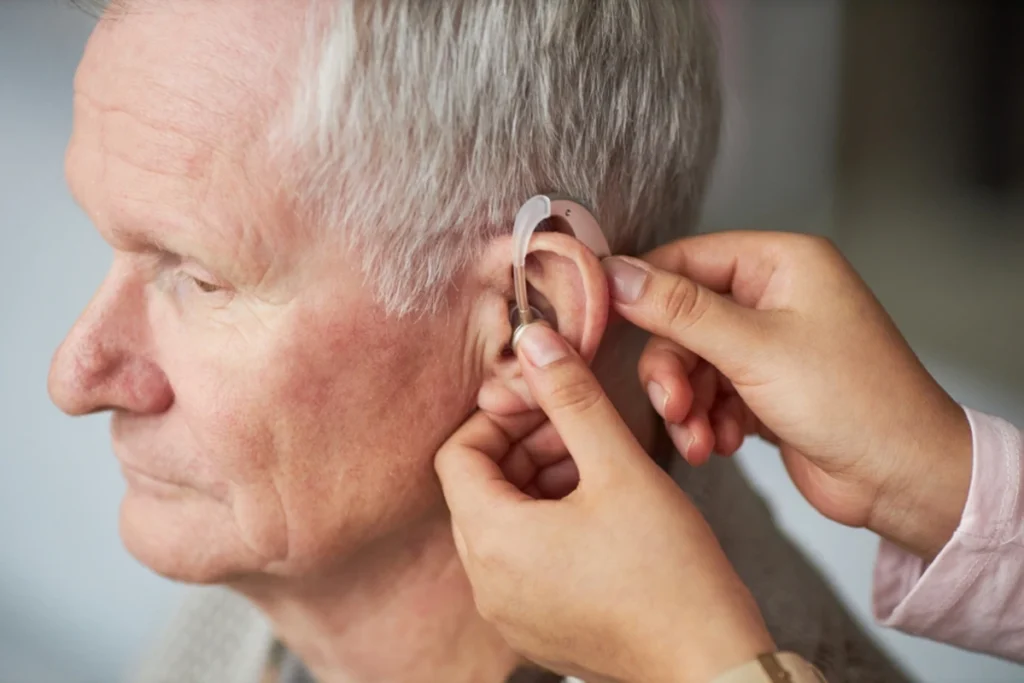
Hearing aids come in different styles. Some fit over the ear, while others sit inside the ear canal. Although hearing aids have advanced considerably, they generally amplify sounds rather than repair the underlying damage to the auditory system. They may improve access to sounds and make speech clearer for many people with hearing loss.
Unlike hearing aids, which amplify sound, cochlear implants convert audio signals into electrical impulses that stimulate the auditory nerve through electrodes implanted in the inner ear.
An external device worn on the head or behind the ear picks up sounds from the surroundings and transmits signals to an implanted receiver. The receiver converts these signals into electrical impulses that stimulate the auditory nerve, helping the user perceive sounds without relying on a conventional hearing aid.
Implant surgery can be expensive, with costs varying considerably depending on the procedure, location, and individual circumstances. Outcomes also vary, and cochlear implants do not restore normal hearing for everyone. For more information about hearing loss and treatment, visit the NHS hearing loss resource.
Conclusion
To sum up, mild hearing loss is a hearing impairment that can make it difficult to follow conversations and hear soft sounds. There are several possible causes, many of which affect parts of the ear that are essential for hearing. Common symptoms include struggling to hear what another person is saying and frequently asking people to repeat themselves during conversations.
It is important to seek professional advice when symptoms appear. An audiologist can assess your hearing, while an online hearing quiz may provide an initial indication of whether further evaluation is needed. Once the type and severity of hearing loss have been identified, an appropriate treatment plan can be recommended, ranging from medication for certain underlying conditions to hearing aids or implants.
We hope the information provided in this article has been helpful. Looking for more insightful articles about hearing? Visit our website to learn more.