
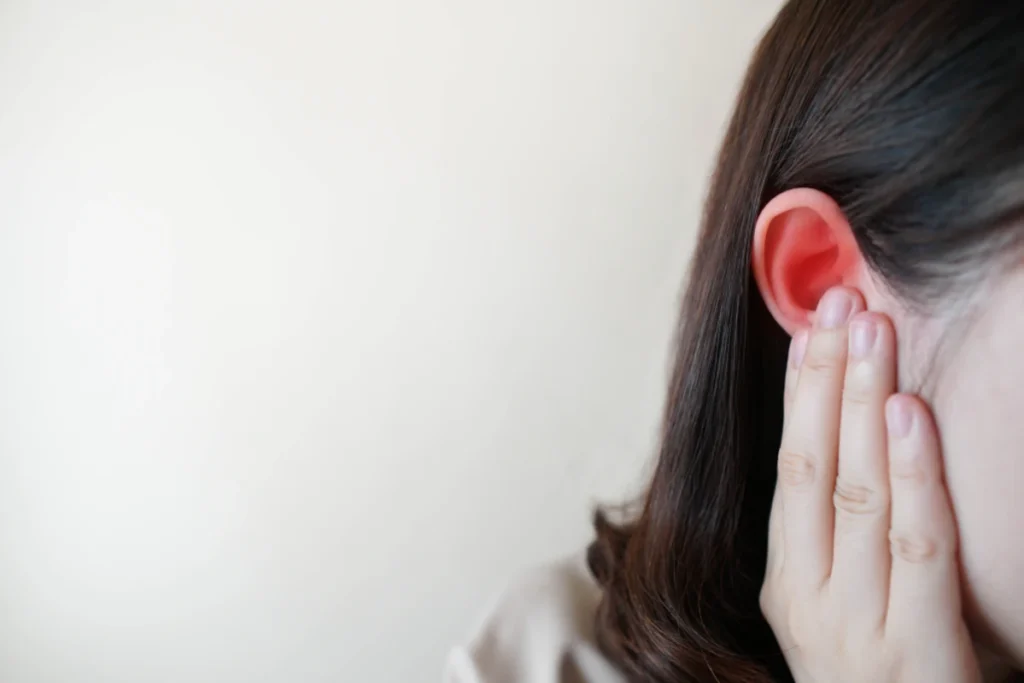
If you’ve ever experienced ringing or other sounds in one or both ears, you are likely familiar with tinnitus. Ringing in the ears is a common concern that is typically caused by one or more underlying conditions. The sounds you hear with tinnitus aren’t caused by external sounds, and other people around you won’t be able to hear them.
Tinnitus can be frustrating to live with and may begin to affect one or more areas of your life. You may even wonder whether some of the other physical concerns you’re experiencing are related to your tinnitus.
For many people, tinnitus may improve by addressing and treating the underlying cause.
An Understanding of Tinnitus
Those who experience tinnitus typically describe it as a ringing sound in one or both ears, even when no external sound is present. Ringing may be the most commonly experienced sound, but tinnitus can also result in other phantom sounds in the ears. These may include clicking, hissing, buzzing, roaring, or humming. In some cases, people hear sounds that they can only describe as music.
The sounds you hear with tinnitus can vary in pitch. They could range from a low roaring sound to a high-pitched squealing sound. For some people, tinnitus can be so loud and overwhelming that it interferes with their ability to focus or even hear external noises.
Tinnitus may come and go for some people, while others may experience symptoms all the time. Even those who experience tinnitus periodically often describe it as frustrating.
Causes of Tinnitus
Just what causes tinnitus? What might be responsible for the tinnitus you’re experiencing? Several factors could contribute to tinnitus, so it’s important to work with medical professionals to identify the cause of your symptoms and determine the right treatment plan.
Some of the factors that can lead to tinnitus include the following:
- Exposure to loud noise, such as what you may experience at a concert or sporting event.
- Certain types of medications, including medications like aspirin and ibuprofen.
- A head or neck injury. Some people may also experience tinnitus if they have a history of jaw clenching or grinding their teeth.
- An ear infection or a blockage in the ears caused by a buildup of earwax.
- High blood pressure, anemia, migraines, thyroid disorders, and certain other medical conditions have been linked to ringing in the ears. Meniere’s disease, a disorder of the inner ear, can also cause tinnitus, along with balance problems and hearing loss.
- Hearing loss, whether due to exposure to loud noises or aging, has a strong connection with tinnitus.
Despite the many potential contributing factors, some people develop tinnitus without a known cause.
Connecting Hearing Loss and Dizziness
There is a strong connection between the ears and our ability to maintain balance. If you’re experiencing hearing loss and dizziness, there could be a correlation. This is particularly true if you have Meniere’s disease, an inner ear disorder that can cause tinnitus, hearing loss, and a feeling of fullness in the ear. Although the sensation of clogged ears and dizziness can occur together, experiencing other symptoms of Meniere’s disease may help your healthcare provider determine whether this condition is responsible. Meniere’s disease typically affects only one ear, although it can affect both ears in some people.
Dizziness associated with the inner ear may cause a sensation of whirling or spinning. You may also feel lightheaded or unsteady on your feet. If you’re experiencing ringing in the ears, dizziness, pressure in the head, and some degree of hearing loss at the same time, you may wonder whether these symptoms are connected.
Conditions that affect the inner ear, including Meniere’s disease and some forms of hearing loss, can influence how you feel. Certain infections and other conditions may also contribute to dizziness. Your dizziness could be associated with one of these concerns, and the tinnitus you’re experiencing may be linked to the same underlying condition.
If left untreated, some underlying conditions may worsen over time. Even if your tinnitus and other symptoms are caused by a temporary condition, such as a sinus infection, it’s important to get checked out. You may also have been living with a gradually developing condition for so long that tinnitus and dizziness now feel normal to you. You might even come to accept mild to moderate hearing loss as a normal part of life. Many people attribute it to growing older or having enjoyed one too many loud concerts in their youth.
If you’ve been experiencing any degree of hearing loss, ringing in the ears, or dizziness, you should make an appointment for an evaluation. The sooner you identify the cause of your symptoms, the sooner you can explore an appropriate solution.