
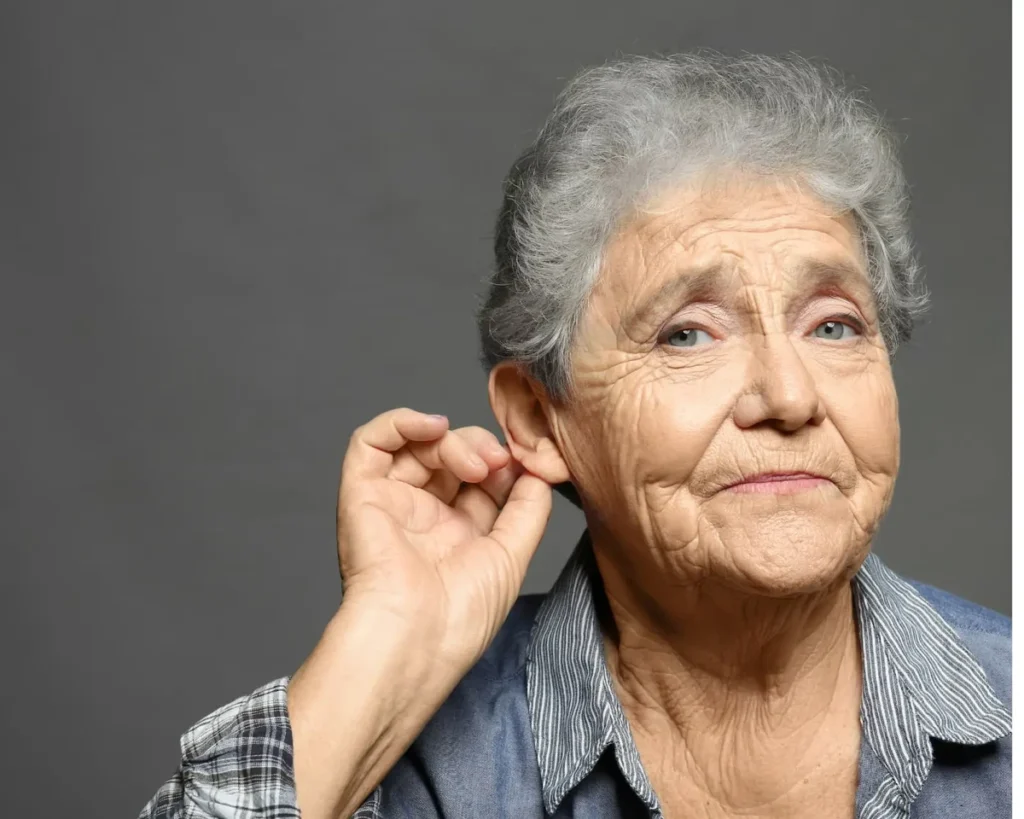
Age-related hearing loss, called presbycusis by hearing professionals, is hearing loss that usually occurs as we grow older. It is one of the most widespread health conditions affecting people over 50. Although age-related hearing loss is not life-threatening, it can have a significant impact on your quality of life.
According to research, at least one in three people in the United States over age 65 has hearing loss, and nearly 50% of people older than 75 have difficulty hearing.
Having trouble hearing can make everyday life difficult and unpleasant. For instance, people with hearing problems may find it hard to follow conversations, understand their doctor’s advice, heed smoke alarms, or hear doorbells. Hearing loss can also contribute to feelings of isolation and depression and is associated with an increased risk of cognitive decline and dementia.
Age-related hearing loss often affects both ears, usually to a similar degree. Because it develops gradually, you might not notice that your hearing is changing. That is why regular hearing checkups are important.
Many factors contribute to age-related hearing loss in older adults. The most common cause is changes in the inner ear that occur with aging. However, changes in the middle ear and in the nerve pathways that carry sound signals from the ear to the brain can also contribute.
Why Do We Lose Our Hearing as We Get Older?
According to medical experts, several factors contribute to hearing loss as we age. It can be challenging to distinguish age-related hearing loss from hearing loss caused by other factors, such as exposure to loud noise.
Noise-induced hearing loss occurs when exposure to loud sounds damages the sensory hair cells in the inner ear that help us hear. Once these hair cells are damaged, they generally cannot regenerate, and the resulting hearing loss may be permanent.
Some medications can be toxic to the sensory cells in the ears and may also lead to hearing loss. In addition, health conditions such as high blood pressure and diabetes can contribute to hearing problems.
Age-related hearing loss is less commonly caused by abnormalities in the outer or middle ear. Many older adults experience a combination of age-related and noise-induced hearing loss.
Symptoms of Hearing Loss in Older Adults
The symptoms of age-related hearing loss often begin with difficulty hearing high-pitched sounds. For instance, you might notice that it is harder to hear the voices of children or women. You may also have trouble understanding other people clearly, especially in noisy environments.
Some common symptoms to watch for include:
- Difficulty distinguishing between “s” and “th” sounds.
- Ringing in the ears, also known as tinnitus.
- Certain sounds seeming unusually loud or uncomfortable.
- Frequently asking people to repeat themselves.
- Difficulty understanding conversations over the telephone.
- Turning up the television or radio volume louder than usual.
Furthermore, if you answer yes to three or more of the following questions, consider having your hearing checked by a hearing professional:
- Are you frustrated when talking to family members because you have difficulty hearing them?
- Do you feel that hearing loss limits your personal or social life?
- Have you felt awkward when meeting people because you struggle to hear?
- Is difficulty hearing or understanding coworkers, clients, or customers causing problems at work?
- Are you restricted or limited by a hearing problem?
How Often Should You Get Your Ears Tested?
Hearing loss is common among older adults and can be identified through appropriate screening and evaluation. Many people do not recognize the early signs because hearing loss often develops gradually, without obvious outward symptoms.
Older adults should have their hearing checked regularly. The appropriate screening schedule depends on age, symptoms, medical history, and risk factors. Some hearing professionals recommend checking hearing every five years until age 50, every three years until age 60, and every one to two years thereafter. If you notice changes in your hearing, do not wait for your next scheduled screening.
Failure to have your hearing checked periodically can affect your physical and mental well-being. Below are some other ways hearing loss can affect your quality of life:
- Hearing loss can reduce your ability to communicate and may contribute to depression, isolation, and social withdrawal.
- Difficulty hearing traffic, telephones, doorbells, emergency vehicles, alarms, smoke detectors, or cries for help can compromise your safety and potentially put your life at risk.
Age-related hearing loss is a gradual process that can become a significant problem if left unaddressed. Early detection is important because timely evaluation and appropriate treatment can help you manage hearing loss and maintain communication and quality of life. Untreated hearing loss is also associated with an increased risk of cognitive decline.
You Have Age-Related Hearing Loss. So, What Next?
Hearing loss can significantly affect your quality of life. If you notice changes in your hearing, the first step is to seek advice from a hearing specialist. At El Dorado Hearing, we have a team of hearing professionals and specialists ready to help you.
Our team of hearing aid specialists helps patients of all ages understand the importance of early intervention for hearing loss. We provide hearing aid assistance, assistive listening devices, and tinnitus treatment. We also offer ear-cleaning services for children and adults.
Our hearing tests and evaluations can help us determine:
- Whether hearing loss is present.
- The possible cause of the hearing loss.
- The degree and type of hearing loss, and whether it affects one or both ears.
- The most appropriate treatment options.
So, what are you waiting for? Book an appointment at El Dorado Hearing or call us at 520-999-2649 for more information.