
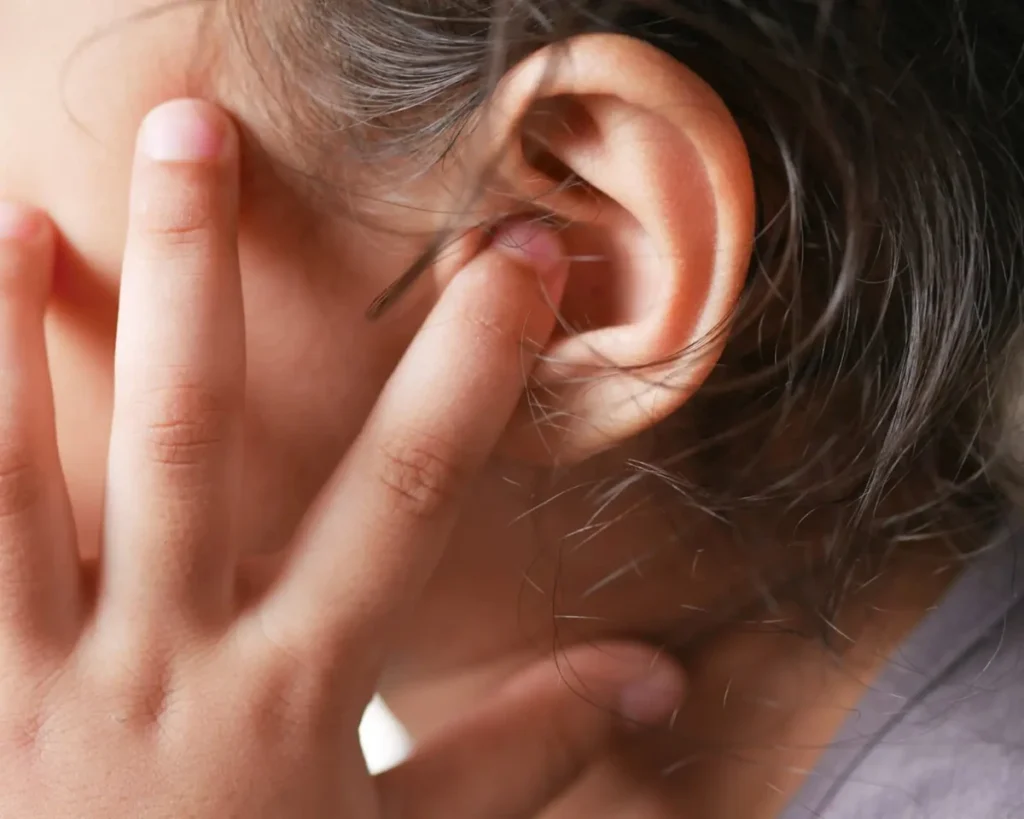
We’ve all experienced pressure in our ears at one time or another. Perhaps it happened while ascending in an airplane, driving through the mountains, or dealing with a cold. What causes this sensation, and what can you do to relieve it?
The middle ear is connected to the upper throat by a small passage called the Eustachian tube. These tubes help equalize air pressure on either side of the eardrum and allow fluid to drain from the middle ear, the space behind the eardrum. They typically remain closed and open briefly when you swallow, yawn, or chew.
These narrow passageways can become blocked or fail to open properly for several reasons. This can cause ear pain, difficulty hearing, and a feeling of fullness in the ears. This condition is known as Eustachian tube dysfunction (ETD).
ETD can affect people of all ages. Depending on the cause, symptoms may resolve on their own or improve with home care. Persistent, severe, or recurring symptoms may require medical evaluation and treatment.
What Are the Symptoms of Eustachian Tube Dysfunction?
What does Eustachian tube dysfunction feel like? Common symptoms include:
- Muffled hearing or difficulty hearing
- Ringing in the ears (tinnitus)
- Popping or clicking sounds
- A feeling of pressure or fullness in the ears
- Ear pain or discomfort
- Occasional dizziness or balance difficulties
- A tickling or unusual sensation inside the ear
Changes in air pressure at higher elevations can worsen symptoms of Eustachian tube dysfunction. Pressure-related ear problems, known as barotrauma, can occur during air travel, scuba diving, or driving through mountainous terrain, particularly when the Eustachian tubes cannot equalize pressure effectively.
What Causes Eustachian Tube Dysfunction?
One of the most common causes of ETD is inflammation and swelling of the Eustachian tube lining, which can prevent the tubes from opening properly. Fluid or mucus may then accumulate in the middle ear. This can happen during a cold, the flu, sinusitis, or an allergic reaction.
Some people are more susceptible to Eustachian tube dysfunction than others. Risk factors include:
Children: Children’s Eustachian tubes are shorter and more horizontal than those of adults. This makes it easier for germs and fluid to reach or accumulate in the middle ear. Their developing immune systems also make them more susceptible to respiratory infections.
Cigarette smokers: Smoking can damage the cilia, tiny hair-like structures that help move mucus away from the middle ear and toward the back of the nose and throat. This damage can interfere with normal mucus clearance.
People with obesity: Obesity has been associated with an increased risk of Eustachian tube dysfunction in some people. The relationship is complex, and obesity is not necessarily the direct cause of the condition.
People with allergies: Allergies can cause inflammation, nasal congestion, and increased mucus production, making it harder for the Eustachian tubes to function normally.
What Types of Eustachian Tube Dysfunction Exist?
Eustachian tube dysfunction has several forms. Three commonly recognized types are patulous ETD, obstructive ETD, and baro-challenge-induced ETD.
- Patulous ETD: The Eustachian tube remains abnormally open instead of closing normally. This can cause autophony, a condition in which your own voice or breathing sounds unusually loud inside your ear.
- Obstructive ETD: The Eustachian tube does not open properly, preventing normal pressure equalization and potentially contributing to middle ear fluid buildup, pressure, or pain.
- Baro-challenge-induced ETD: The Eustachian tube has difficulty equalizing pressure during changes in ambient pressure, such as when flying, diving, or traveling through mountainous areas. Symptoms may occur mainly during these pressure changes.
How Do You Clear a Blocked Eustachian Tube?
In many cases, Eustachian tube dysfunction improves on its own, particularly when it is associated with a cold or temporary congestion.
For babies and young children, feeding or offering a pacifier can encourage swallowing, which may help equalize ear pressure. Older children and adults may also find relief by swallowing, yawning, or chewing gum.
If symptoms persist, a healthcare professional may recommend other treatment options depending on the underlying cause. These may include:
- Decongestants: These may provide short-term relief from nasal congestion in selected cases, but they are not appropriate for everyone and do not reliably treat ETD itself. Some may worsen symptoms or cause side effects.
- Steroid nasal sprays or antihistamines: These may help when allergies or nasal inflammation contribute to symptoms. They are not effective for every type of ETD.
- Myringotomy: A doctor makes a small incision in the eardrum to drain fluid from the middle ear. In selected cases, this can relieve pressure or help address persistent fluid buildup.
- Tympanostomy tubes: Small tubes inserted into the eardrum help ventilate the middle ear and allow fluid to drain. They may be recommended for certain people with persistent middle ear fluid or recurrent ear infections. The tubes often fall out naturally after several months to a few years, depending on the type used.
- Balloon dilation: In selected adults with persistent obstructive ETD, a doctor may use a catheter to insert and inflate a small balloon in the Eustachian tube. The procedure is intended to improve the tube’s ability to open and equalize pressure.
The appropriate treatment depends on the type of ETD, the duration of symptoms, and whether other conditions are present. Do not use ear drops or attempt to remove middle ear fluid yourself without medical guidance.
How to Relieve Eustachian Tube Dysfunction at Home
You can try the following measures to relieve mild ear fullness or pressure:
- Chew gum: Chewing encourages swallowing, which can help equalize pressure.
- Swallow frequently: Drinking water or swallowing repeatedly may help the Eustachian tubes open.
- Yawn: Yawning can help equalize pressure in the middle ear.
- Try gentle pressure equalization: Pinch your nostrils closed, close your mouth, and gently exhale as though blowing your nose. Do not blow forcefully, and stop if you experience pain or dizziness.
- Use a saline nasal spray: Saline may help relieve nasal congestion and clear mucus from the nasal passages.
- Encourage swallowing in babies: Offering a bottle or pacifier may help relieve mild pressure-related discomfort.
These measures may help with mild symptoms, but they do not treat every cause of ETD. Avoid forceful pressure-equalization techniques, especially if you have significant ear pain, a suspected eardrum perforation, or an active ear infection.
Risk Factors
Anyone can experience Eustachian tube dysfunction, but certain factors can increase the likelihood of developing it or experiencing recurring symptoms.
- Obesity: Some research suggests an association between obesity and ETD, although the underlying mechanisms are not fully understood.
- Smoking: Tobacco smoke can damage the cilia responsible for clearing mucus and may interfere with normal Eustachian tube function.
- Allergies: Allergic inflammation can cause nasal congestion and increased mucus production, affecting the tubes’ ability to open properly.
- Childhood: Children have shorter, more horizontal Eustachian tubes and developing immune systems, making them more susceptible to middle ear fluid buildup and infections.
- Frequent respiratory infections: Colds and other upper respiratory infections can cause inflammation that interferes with normal pressure regulation.
How Long Does Eustachian Tube Dysfunction Last?
The duration of Eustachian tube dysfunction depends on its cause. Symptoms associated with a cold or temporary congestion may improve within a few days to a couple of weeks. However, symptoms caused by persistent allergies, chronic inflammation, or ongoing middle ear fluid can last longer.
If symptoms persist, recur frequently, or do not improve with home care, contact a healthcare professional for an evaluation. Seek prompt medical attention if you develop sudden hearing loss, severe ear pain, significant dizziness, fluid or blood coming from the ear, or swelling behind the ear.
Please contact us at El Dorado Hearing for an evaluation and guidance on appropriate treatment to help you hear more comfortably and feel better.