
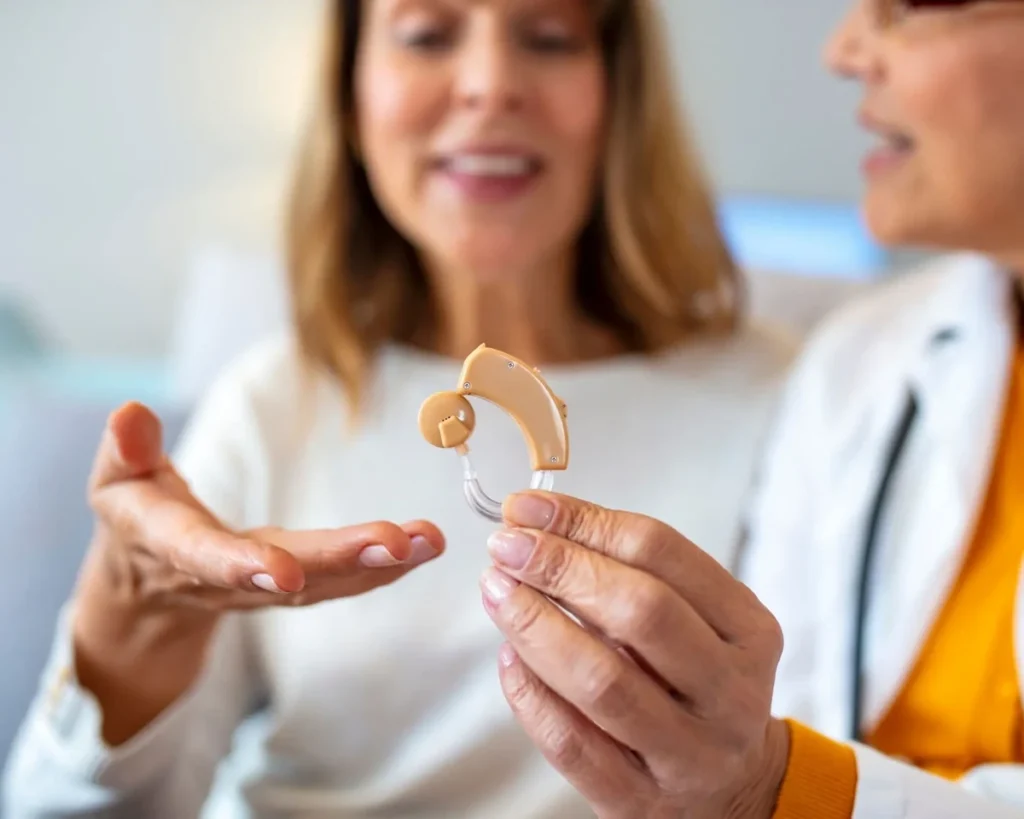
Getting used to new hearing aids can be challenging. They may feel awkward and uncomfortable at times! Like anything new, wearing hearing aids regularly takes practice until it becomes a habit.
When you first start wearing hearing aids, it is recommended that you wear them as often as possible, following your hearing care professional’s guidance. They may feel strange at first, but before you know it, you may feel more comfortable returning to your normal lifestyle and enjoying new opportunities to socialize and stay active.
Staying physically active is an essential part of everyday life. An active lifestyle can improve your health, sleep, and concentration. If you plan to get back into a workout routine, consider whether you should remove your hearing aids during exercise.
There are two main reasons to consider removing them: you may want to avoid damaging them with sweat and moisture, and you may want to reduce the risk of losing them during vigorous exercise.
When Is It Best to Take Out Your Hearing Aids?
As discussed, wearing your hearing aids regularly can help you get the most benefit from them. However, there are times when it may be best to take them out.
Intense Workouts or Exercise
Taking your hearing aids out during intense exercise can reduce anxiety and stress. You won’t have to worry as much about whether they might fall out, become damaged, or get lost. If you play a contact sport, removing them can also help reduce the risk of injury to your ears or damage to the devices if you accidentally get hit in the head.
Protecting your hearing aids from damage can help them last longer and work better. Whether you’re using an elliptical machine or going for a jog, sweat can cause hearing aids to slip out, become misplaced, or get damaged. Repeated exposure to sweat and moisture can also affect their performance and hygiene. It’s best to store your hearing aids safely in their case during intense workouts.
If you start working out and forget to take out your hearing aids, find a safe place to store them. You could put them in their protective case and keep it in your gym bag. Avoid wrapping them directly in a towel or placing them loose in a pocket, where they could be damaged or lost. If you need help keeping your hearing aids secure during exercise, ask your hearing care professional about suitable retention accessories.
Following a routine for removing your hearing aids and storing them safely can help reduce the stress of worrying about losing them.
Swimming, Surfing, or Showering
To protect your hearing aids, avoid exposing them to water unless your specific model is designed to withstand it. If you go swimming, surfing, or take a shower, your hearing aids may get wet. Water exposure can damage electronic components, cause corrosion, and shorten the life of your devices.
If your hearing aids get wet, follow the manufacturer’s drying and care instructions. A hearing aid drying kit or dehumidifier may help, but there is no guarantee that the devices will remain undamaged. Contact your hearing care professional if they stop working properly.
Extreme Weather
Rain, sleet, and snow can expose your hearing aids to moisture. If you’re going to be shoveling snow or get caught in an unexpected downpour, consider removing your hearing aids and storing them in a protective case. Check your device’s water-resistance rating and follow the manufacturer’s recommendations.
Sleep
It is generally not recommended to sleep with your hearing aids in. Removing them at night gives your ears a break and can help conserve battery life. It also provides an opportunity to clean and dry your devices before storing them.
You may sometimes worry about not hearing sounds in your environment at night. If this causes you stress, talk to your hearing care professional about suitable options, such as assistive alerting devices, rather than routinely sleeping with your hearing aids in.
Removing your hearing aids at night can help extend battery life. If you use rechargeable hearing aids, place them in their charger according to the manufacturer’s instructions.
Additional Tips for Caring for Your Hearing Aids
To help your hearing aids last as long as possible, follow these care tips:
- Inspect and clean your hearing aids daily using the cleaning tools and products recommended by the manufacturer. Avoid using antibacterial wipes unless they are specifically approved for your devices.
- Store your hearing aids in a clean, cool, dry place when they are not in use, preferably in their protective case or a suitable drying container.
- Keep them away from extreme heat, cold, and direct sunlight.
- Make sure your ears are dry before putting your hearing aids back in.
- Follow the manufacturer’s instructions for cleaning, charging, and routine maintenance.
If you’ve been wearing your hearing aids while working out and they are no longer working as they should, they may need professional cleaning, repair, or replacement. Visit El Dorado Hearing if you’re having problems with your hearing aids. We can help you find the right solution and get back to hearing comfortably!