
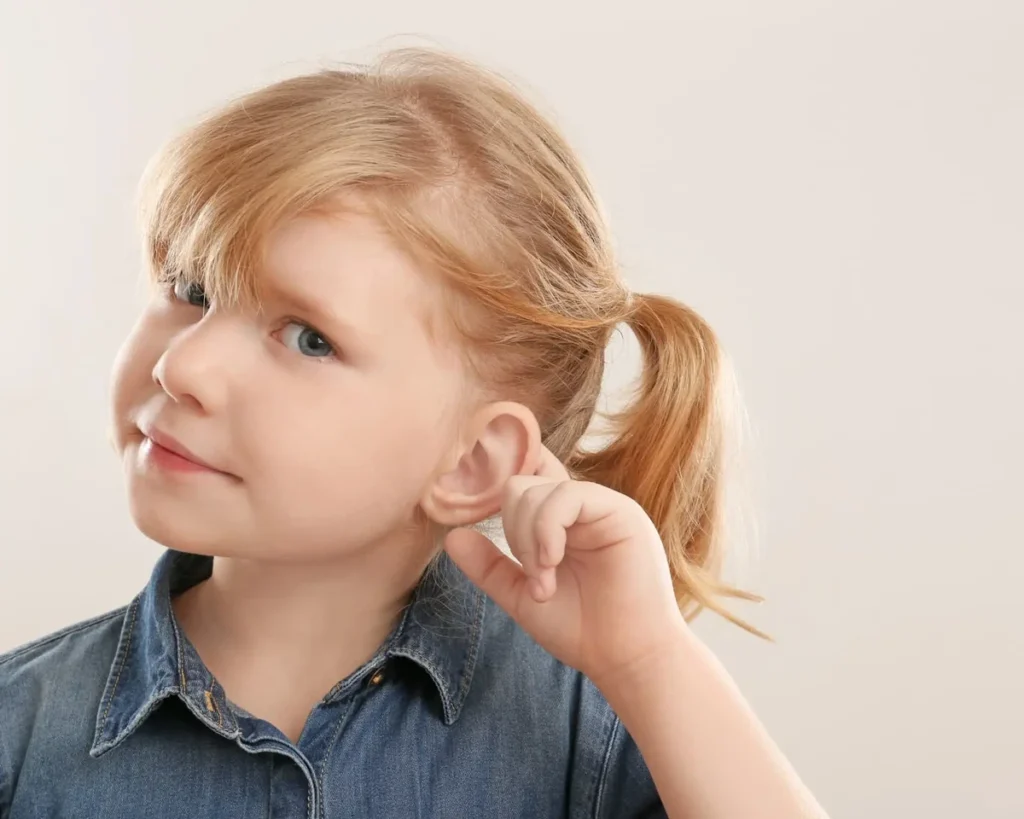
Hearing loss can occur at any age, but it is especially important to address when it affects children. There are many possible causes of hearing loss in children. Short-term issues, such as ear infections and earwax buildup, can block sound and may improve with appropriate treatment.
It can be stressful and upsetting when a child is not meeting expected developmental milestones. Some causes of hearing loss, however, are long-term conditions for which early diagnosis and intervention are crucial.
This article explores some of the signs and symptoms of hearing loss in children. If you suspect your child may have difficulty hearing, take your concerns seriously and arrange a hearing test to help identify the cause and determine the next steps.
Signs of Hearing Loss in Children
Children may not always tell you when they have difficulty hearing. If you suspect your child is experiencing hearing loss, look for these common signs and symptoms:
- Not responding to their name.
- Not reacting to familiar voices.
- Not responding to nearby sounds or having difficulty identifying where sounds are coming from.
- Delays or difficulties in language development.
- Behavioral or social difficulties, including trouble following directions.
These signs can indicate a range of issues. Let’s explore them further and examine some common causes of hearing loss in children.
Issues with Language Development
Language development in children is a complex process that has been studied by medical professionals, psychologists, and linguists for decades. Research shows that several factors can contribute to delayed speech or language development. Hearing difficulties are one possible cause, but they are not the only explanation.
Common signs of speech or language difficulties include:
- Limited speech, unclear speech, or little to no spoken language.
- Speaking differently from other children of a similar age.
- Responding inappropriately to questions or frequently misunderstanding what is said.
- Difficulty learning or following verbal instructions.
- Babbling or using early speech sounds beyond the age when more advanced communication is expected.
- Difficulty pronouncing or articulating words.
- Behavioral challenges or social difficulties.
By around three years of age, many children can speak in sentences of three or four words. However, children develop at different rates, and developmental milestones are guidelines rather than strict deadlines. A speech delay does not necessarily indicate a serious problem, although some children may need additional support.
It is important not to ignore persistent concerns. A hearing test can help determine whether hearing loss may be contributing to a child’s speech or language difficulties. If hearing is not the cause, a healthcare professional may recommend further developmental assessment to investigate other possible explanations.
Hearing Loss Due to Genetic Causes
A substantial proportion of childhood hearing loss is associated with genetic factors. Your doctor may review your family’s medical history and recommend further testing to help determine whether an inherited condition is involved.
Genetic hearing loss may be present at birth (congenital), although some inherited conditions do not become apparent until later in childhood. Hearing loss can also occur as part of certain genetic syndromes.
For example, Down syndrome and Usher syndrome can be associated with hearing loss. The likelihood and type of hearing difficulties vary depending on the specific condition.
Hearing Loss Due to Complications at Birth
Hearing loss can be associated with certain prenatal, birth-related, and postnatal complications. Possible risk factors include:
- Maternal infections during pregnancy that can affect a baby’s hearing.
- Serious head injuries.
- Structural differences or abnormalities involving the head or ears.
- Complications requiring care in a neonatal intensive care unit, particularly when associated with other risk factors for hearing loss.
Having one of these risk factors does not necessarily mean a child will develop hearing loss. A healthcare professional can assess the child’s individual circumstances and recommend appropriate hearing screening or testing.
Hearing Loss Due to Other Issues
Some infections and medical conditions can affect babies and young children more seriously than adults. Depending on the underlying cause, hearing loss may be temporary or permanent. Some children regain their hearing as the condition improves, while others may need ongoing treatment or support.
Conditions That May Cause Acquired Hearing Loss
- Viral infections: Certain infections, including meningitis, measles, and mumps, can damage the structures involved in hearing.
- Head trauma: Injuries to the head can damage the ear or the pathways involved in hearing.
- Frequent ear infections: Recurrent infections, particularly those involving fluid in the middle ear, can affect hearing and may interfere with speech and language development.
- Noise-induced hearing loss: Exposure to excessively loud sounds can damage hearing, even in children.
Conditions That May Cause Temporary Hearing Loss
- Swimmer’s ear: An infection of the outer ear canal can cause swelling and temporarily reduce hearing.
- Middle ear infections: These are common in young children and may cause fluid to accumulate behind the eardrum, temporarily affecting hearing.
- Earwax buildup or foreign objects: Blockages in the ear canal can prevent sound from reaching the eardrum effectively. Foreign objects should be removed by a healthcare professional rather than at home.
Should My Child Have a Hearing Test If They Show Symptoms of Hearing Loss?
If your child shows signs of hearing loss, it is important to arrange an assessment with a qualified hearing professional or healthcare provider promptly. They can evaluate your child’s hearing, help identify the possible cause, provide guidance, and recommend further assessment or treatment when necessary.
Do not wait for a routine appointment if your child experiences sudden hearing loss. Seek urgent medical attention, as prompt evaluation may be important for treatment.
You can book a comprehensive hearing assessment with El Dorado Hearing.