
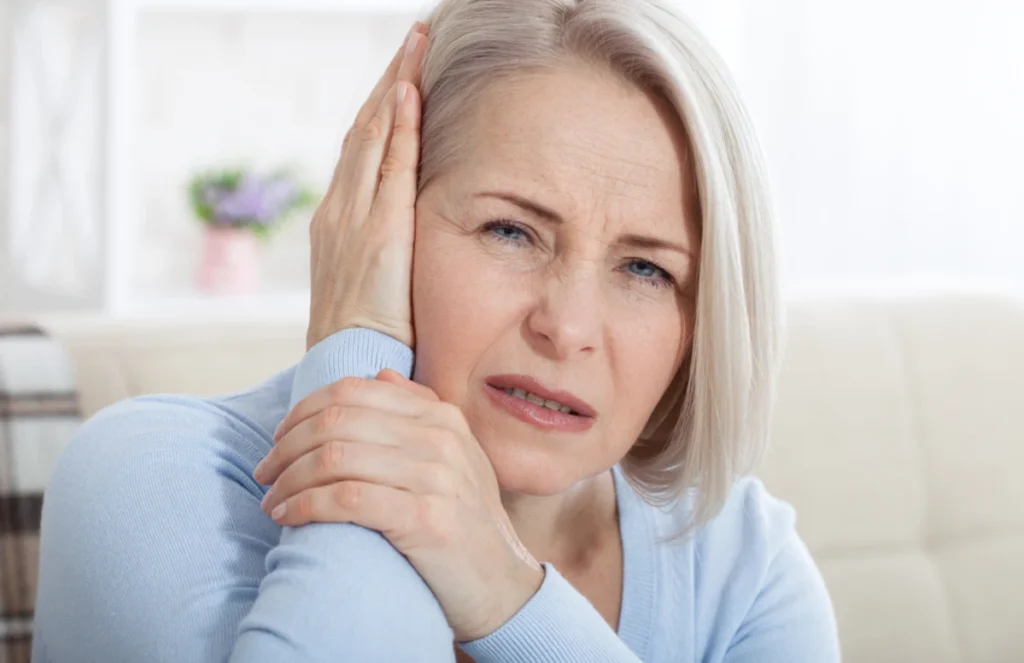
Many people over the age of 60 start to experience hearing loss due to the natural process of aging. Although there is no single cause of age-related hearing loss, several risk factors can contribute to it. Some of the most common factors include:
- Genetics
- Exposure to extreme noise
- Smoking
- Diabetes or other health issues
- Medications
How Does Age-Related Hearing Loss Happen?
Damage to the tiny hair cells inside the ear can cause hearing loss. These cells help transfer sound information to the brain by picking up sound vibrations and converting them into nerve signals that the brain interprets.
These hair cells may become damaged through noise exposure or the normal aging process. When hearing loss occurs with age, it often affects both ears. It may develop gradually over time.
It can be difficult to transition from hearing perfectly to living with hearing loss. You may feel worried or embarrassed when you start to lose your hearing. You may feel that people will judge you as being too old to take part in life. This is completely untrue, and there is nothing shameful about experiencing hearing loss.
Hearing Loss Can Cause Strong Emotions
It’s okay to experience feelings of anxiety, anger, and helplessness. Take time to talk to others about how you are feeling. They can help support you during this transition in your life.
Hearing loss is not something you should ignore. It can affect your quality of life unless you find ways to manage it.
- You might feel stress and anxiety because it is difficult to engage in conversations.
- Communicating at work may become challenging, and you may fear repercussions for missing vital information.
- You may blame yourself for not hearing well and missing out on social conversations.
- You may become depressed, isolated, or anxious, which can affect your overall health and well-being.
It is normal to want to deny that you are experiencing hearing loss. However, it is important to know that you have support and options for improving your hearing health. Keeping your hearing loss to yourself may prevent you from getting the help you need. Hearing loss has also been associated with an increased risk of health problems, including cognitive decline and dementia.
Hearing Aids Can Help
The good news is that seeking treatment and support early can help you manage hearing loss and maintain your quality of life. With appropriate care, you can continue to enjoy life to the fullest. If hearing aids are recommended, they may help you participate more comfortably in conversations, stay socially connected, and remain mentally engaged.
Tips for Family Members
If you know someone who is struggling with hearing loss, here are a few tips to help them feel supported.
Speak their name to get their attention. Face them when you speak, wave your hand, or give them a light tap on the shoulder to get their attention.
Minimize background noise. Choose a quiet location for conversations or eliminate as much background noise as possible. This includes music, television, or even the dishwasher. When in public, find a quiet corner of the room so everyone can enjoy the conversation.
Remind others to speak one at a time. In group settings, remind everyone to speak one at a time and clearly. Multiple conversations happening at once can be overwhelming and confusing for someone with hearing loss.
Speak loudly and clearly. Make sure you speak clearly, but don’t exaggerate your speech. You don’t need to shout, but you may need to raise your voice slightly. Speak at an even pace so the person can understand you without having to ask you to repeat yourself.
Be prepared to repeat yourself. When talking with someone who has difficulty hearing, understand that they may not comprehend what you are saying the first time. You may need to repeat yourself and check whether they understood. Try to remain consistent with your wording to help prevent confusion.
Use visual cues. When someone has difficulty hearing, good lighting and visibility can provide visual cues that help them understand what is being said. Always face the person directly when speaking. Maintain eye contact and use hand gestures.
Practice patience. Be understanding and patient when talking to someone who is hard of hearing. If you feel yourself becoming frustrated, take a deep breath and consider how difficult the situation may be for them.
El Dorado Hearing Can Help
If you or your loved one are struggling with age-related hearing loss, visit our website to learn more about hearing loss causes and treatments in Tucson, AZ.
Making an appointment with our audiologists to manage your hearing loss can help improve your overall quality of life. We will provide an appropriate diagnosis and help you understand the cause of your hearing loss and how to address your unique situation.
Hearing loss doesn’t have to affect your quality of life. With a comprehensive hearing care plan, you can continue enjoying the lifestyle you love.