
Hearing loss is a common problem affecting millions of people worldwide. Because of this, there has been an increased research effort to understand hearing loss and create assistive devices that allow those with hearing loss to minimize its effects. Thanks to those efforts, hearing loss solutions have come a long way, giving people more choices when choosing the right device for them. Continue reading to learn more about how solutions for hearing loss have changed over time, focusing on the improvements and options available now.
Technological Advancements
Technological progress is one of the most significant changes between hearing loss treatments today and in the past. In the past, hearing aids were usually big and awkward and didn’t give the wearer much confidence or privacy. But since digital technology has developed, hearing aids have become less noticeable. The way sound is handled and amplified has also improved, thanks to digital processing. This has led to better sound quality and a better user experience.
Hearing aids today have features like noise reduction, feedback cancellation, and directional microphones that make them more useful. These features are highly beneficial in helping people who have trouble hearing in noisy places, allowing them to focus better on specific sounds. Noise reduction technology analyzes incoming sounds and reduces background noise so that the person can hear the message more clearly. Feedback reduction can also reduce the annoying whistling sound that older hearing aids often produce.
Understanding Hearing Aid Types
These days, people with trouble hearing have many choices regarding hearing aids. Traditional behind-the-ear (BTE) and in-the-ear (ITE) hearing aids are still widely used and useful for different levels of hearing loss. However, modern hearing aids go beyond these choices.
Completely-in-the-canal (CIC) and invisible-in-the-canal (IIC) devices are becoming more common because they are hard to see when worn. These devices are custom-made to fit inside the ear canal. They offer a discreet appearance and can provide improved sound quality compared with older devices. CIC and IIC devices are suitable for some people with mild to moderate hearing loss and can help reduce anxiety about wearing assistive devices.
The receiver-in-canal (RIC) or receiver-in-the-ear (RITE) devices are another choice. They have a small part behind the ear linked by a thin wire to a receiver in the ear canal. RIC devices can provide a natural sound experience by leaving much of the ear canal open. This can help you better pinpoint where sounds are coming from and reduce the effects of occlusion.
Permanent Hearing Aid Options
People with more severe or certain kinds of hearing loss can now get implantable hearing solutions in addition to traditional hearing aids. Implantable devices like cochlear implants and bone-anchored hearing systems have dramatically changed how hearing loss affects these people, opening up a world they didn’t think was possible.
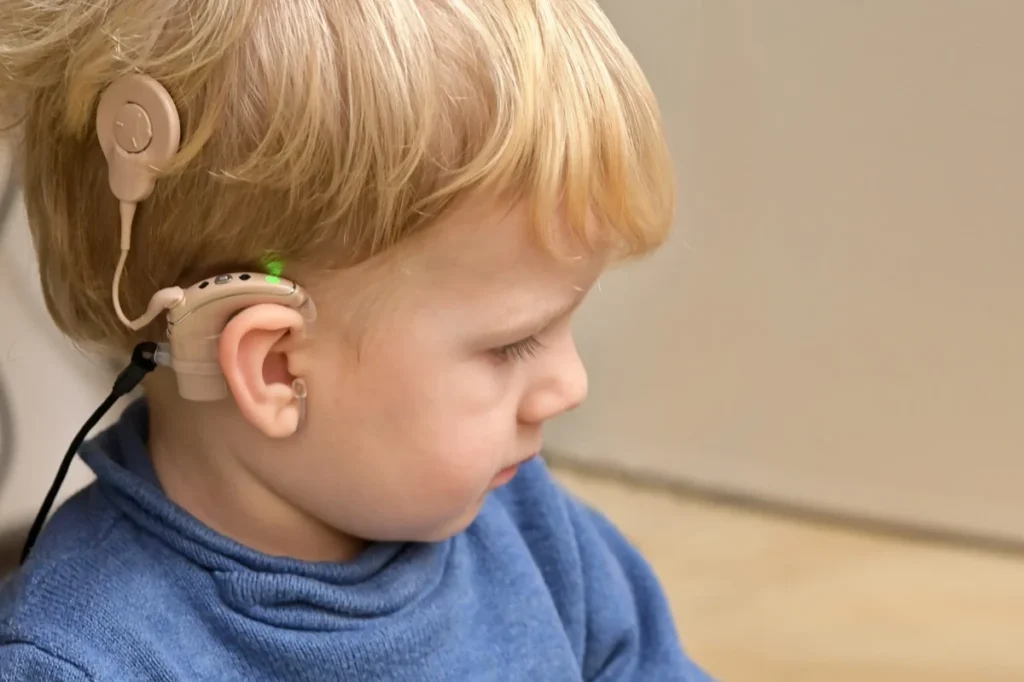
Cochlear implants are electronic devices that are surgically placed in the inner ear. They have an external speech processor, which is worn behind the ear, and an internal component that directly stimulates the auditory nerve. People with profound hearing loss can benefit greatly from cochlear implants, as the way they process sound can help them understand words better. They work by bypassing damaged parts of the ear and stimulating the auditory nerve directly.
Another type of permanent hearing solution is a bone-anchored hearing system. BAHS uses bone conduction to send sound vibrations straight to the inner ear, bypassing the outer and middle ears. It is especially helpful for people with conductive or mixed hearing loss, in which sound cannot reach the inner ear effectively because of problems in the outer or middle ear. BAHS typically comprises a small titanium implant surgically placed in the bone behind the ear and an external sound processor connected to the implant. The sound processor picks up sound waves and turns them into vibrations. These vibrations are then sent to the inner ear through the implant.
Innovative Features for Hearing Assistance
Wireless connectivity and smart features are also a big step forward in current hearing loss solutions. Many hearing aids now use Bluetooth, which lets people wirelessly connect their phones, TVs, and other audio devices. This makes it easy to stream phone calls, music, and other sounds straight to the hearing aids, making them more convenient and easy to use.
Some hearing aids even come with smartphone apps that let people change the settings, create their own listening profiles, and track how their hearing is changing over time. These apps give people more control over their hearing aids by allowing adjustments, so they can ensure their devices fit their needs and preferences.
Some hearing aids also have artificial intelligence (AI) algorithms that can learn the user’s preferences and change the settings automatically based on the listening environment. This adaptive technology improves the listening experience in different situations, making the transition from quiet to noisy settings smoother.
Discover Your Options for Better Hearing
Hearing loss devices have come a long way, giving people a wider range of options. As technology has improved, hearing aids have become smaller and more advanced, with multiple features that meet individual preferences. And those working hard to improve hearing for people with hearing loss aren’t done yet. They’re still working to improve assistive devices and provide even more options to enhance the quality of life for those with hearing loss.
If you’re curious about your options for hearing assistive devices, contact Eldorado Hearing today. Our skilled team will evaluate your hearing loss and provide a comprehensive diagnosis and options that match your needs.