
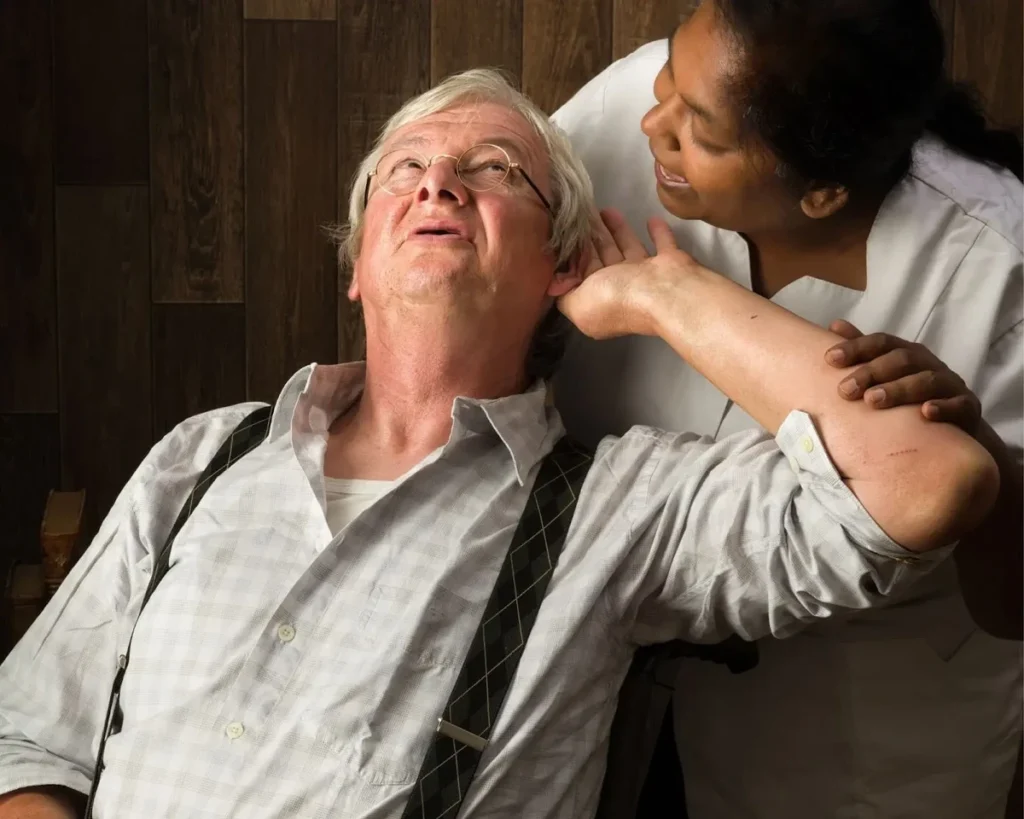
It is estimated that 48 million Americans have some degree of hearing loss. While hearing loss is relatively common, especially as we age, there are different levels of hearing loss an individual may experience. From mild to profound hearing loss, understanding the key differences is essential to finding appropriate treatment and improving access to sound.
Today, El Dorado Hearing discusses severe-to-profound hearing loss, including what these levels mean, which sounds may be difficult to hear, and the treatment options that may help.
Severe Hearing Loss
Severe hearing loss is an advanced degree of hearing loss that can make it very difficult to hear speech and other everyday sounds without hearing technology. People with severe hearing loss may struggle to understand conversational speech and may not hear many quieter or high-pitched sounds.
If earwax buildup or a blockage is contributing to hearing difficulties, removing it may improve hearing. However, severe hearing loss often requires additional support, such as appropriately fitted hearing aids or, in some cases, a cochlear implant.
A comprehensive hearing evaluation can help a hearing specialist determine the degree and type of hearing loss and recommend an appropriate treatment plan. Hearing technology can improve access to sound, although the results vary from person to person.
Profound Hearing Loss
Profound hearing loss is the most severe degree of hearing loss. People with profound hearing loss may have very limited access to sounds, even with hearing aids. The quietest sounds they can detect are typically much louder than those audible to people with less severe hearing loss.
Hearing thresholds associated with profound hearing loss are generally around 90 decibels hearing level (dB HL) or greater, although classifications can vary. Some people may benefit from powerful hearing aids, while others may be candidates for cochlear implants. A hearing specialist can assess individual needs and discuss suitable options.
Challenges of Severe-to-Profound Hearing Loss
Individuals with severe-to-profound hearing loss may experience some of the following challenges:
- Difficulty understanding speech in noisy environments
- Reduced speech clarity, even when the volume is increased
- Difficulty holding telephone conversations
- Missing everyday sounds, alerts, or conversations
Without appropriate support, conversations can be challenging for people with severe hearing loss. Even with hearing devices, understanding speech may remain difficult in certain environments, especially where background noise is present.
How Hearing Aids Can Help with Severe Hearing Loss
Not all hearing aids are designed for the same degree of hearing loss. People with severe hearing loss may benefit from power hearing aids, which are designed to provide greater amplification than many standard models.
Power hearing aids are often fitted behind the ear and may be paired with a custom earmold to help deliver sound effectively and provide a secure fit. The appropriate style and level of amplification depend on the individual’s hearing test results, ear anatomy, listening needs, and comfort.
Hearing aids can improve access to speech and environmental sounds, but they do not restore normal hearing. For some people with severe-to-profound hearing loss, a cochlear implant evaluation may also be appropriate.
Schedule a Hearing Test with El Dorado Hearing of Tucson
To help manage your hearing loss, El Dorado Hearing provides comprehensive hearing evaluations. Our hearing specialists can assess your hearing, determine the degree of hearing loss, and discuss potential treatment options based on your needs.
If you are looking for personalized hearing testing in Tucson, AZ, consider scheduling an appointment with El Dorado Hearing. We strive to create a comfortable, welcoming environment for everyone who visits our offices.
If you are ready to take the next step toward better hearing, visit one of our hearing clinics. Contact us today to schedule an appointment with one of our hearing specialists!