Although hearing aid technology has improved significantly in recent years, some types of hearing loss may require a more advanced solution. If hearing aids do not provide sufficient benefit, an individual may be a candidate for a cochlear implant. What exactly is a cochlear implant? What type of hearing loss can it help with? Who qualifies as a candidate for cochlear implants? Follow along as El Dorado Hearing answers some of the most common questions about cochlear implants.
What Is a Cochlear Implant?
Unlike a hearing aid, which can be removed and worn as needed, a cochlear implant is a medical device that requires surgery and can help people with severe to profound hearing loss perceive sounds. Although cochlear implants do not restore natural hearing, they provide electrical stimulation to the auditory nerve, creating a sensation of sound.
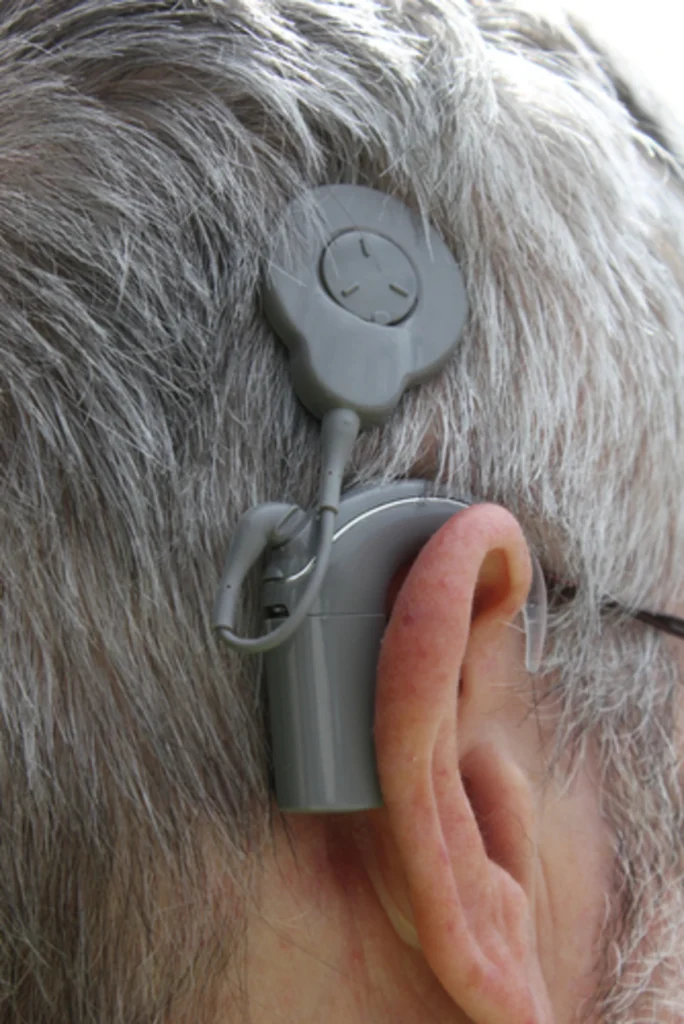
A cochlear implant system consists of two main parts: an external component, which includes a microphone, speech processor, and transmitter, and an internal component, which includes a receiver and an electrode array. These components work together to help people with significant hearing loss detect sounds and, with practice and rehabilitation, better understand speech.
Cochlear Implants Versus Hearing Aids
If you have hearing loss, you may be wondering how a cochlear implant differs from the most common treatment option: hearing aids.
Hearing aids amplify sounds from the environment and deliver them into the ear at a level that may make them easier to hear. They rely on the ear’s remaining ability to process sound. Cochlear implants work differently by bypassing damaged parts of the inner ear and using electrical signals to stimulate the auditory nerve.
Although cochlear implants do not restore natural hearing, they may help people detect sounds and understand speech that they would otherwise struggle to hear. The results vary from person to person, and rehabilitation is an important part of learning to use a cochlear implant effectively.
Who Is a Candidate for a Cochlear Implant?
Cochlear implants may be recommended for people with severe hearing loss who receive limited benefit from appropriately fitted hearing aids. Candidacy depends on several factors, including hearing test results, speech understanding, medical history, and individual communication needs.
To determine whether someone may benefit from a cochlear implant, a specialist will review their hearing history and perform audiological testing, including assessments of speech understanding with hearing aids. If hearing aids provide insufficient benefit, the specialist may recommend a cochlear implant evaluation.
Before surgery, the patient typically undergoes a comprehensive assessment that may include audiological evaluations, a medical examination, imaging studies, and other assessments as needed. These help the clinical team determine whether surgery is appropriate and establish realistic expectations for the outcome.
Cochlear implant surgery involves placing the internal component beneath the skin and inserting the electrode array into the cochlea. The procedure’s duration varies depending on the individual and the surgical circumstances. After the surgical site has healed, the external component is fitted and activated. The patient then begins a period of adjustment, programming, and auditory rehabilitation.
Although cochlear implants do not fully restore natural hearing, they may help people with significant hearing loss access sounds and understand speech more effectively. If you are unsure whether you qualify for a cochlear implant, schedule an appointment with a hearing specialist to discuss your hearing needs and available treatment options.
Schedule a Hearing Test with El Dorado Hearing of Tucson
At El Dorado Hearing, we provide comprehensive evaluations to help assess and manage hearing loss. Our experienced hearing specialists offer detailed hearing assessments to determine whether hearing loss is present and evaluate its severity and impact on daily life.
If your hearing evaluation indicates significant hearing loss that is not adequately helped by hearing aids, our team can discuss appropriate next steps and treatment options. Depending on your results, you may benefit from adjustments to your current hearing aids, alternative hearing solutions, or an evaluation by a cochlear implant specialist.
For personalized hearing testing in Tucson, Arizona, consider scheduling an appointment with El Dorado Hearing. We strive to make our clinics comfortable and welcoming, and our team is happy to explain the available treatment options so you can make an informed decision about your hearing health.
If you are ready to take the next step toward better hearing, visit one of our hearing clinics. For information about hearing technologies available in Tucson, contact us today to schedule an appointment with one of our caring and experienced hearing specialists!